



When Public Access Policy Meets Publishing Power
The United States has been creating policy on public access to federally funded research for the last 20 years. What can we learn from Elsevier’s attempts to shape it?
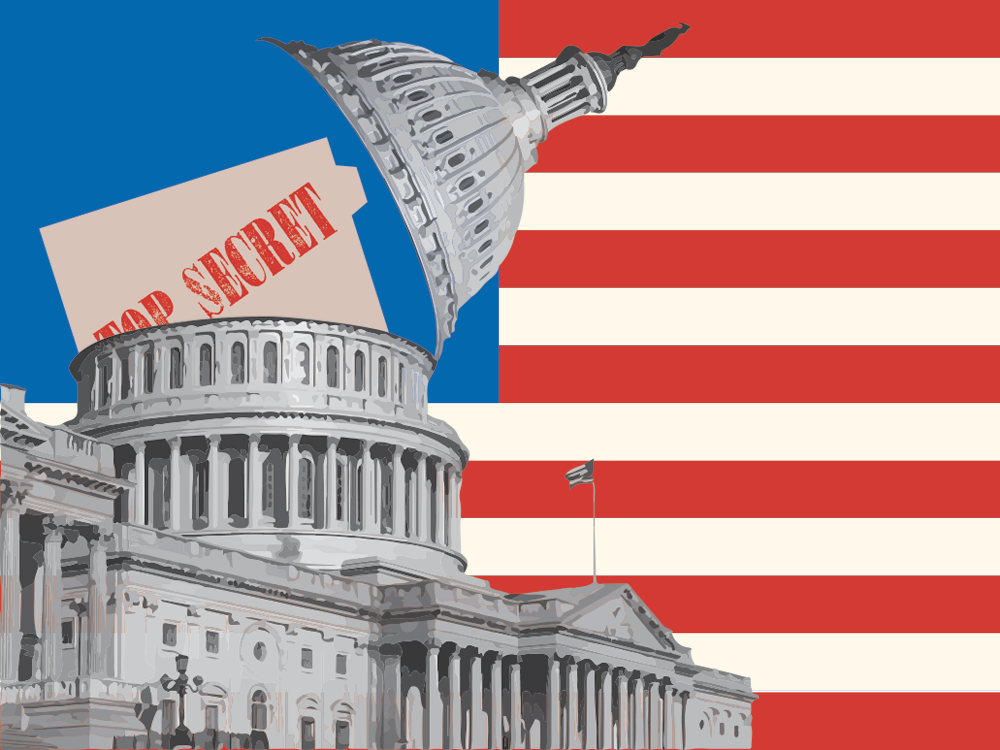
The United States has been creating policy on public access to federally funded research for the last 20 years. What can we learn from Elsevier’s attempts to shape it?

The history of public access policy in the United States is relatively recent: such policies did not appear in any form until 2004, when the National Institutes of Health recommended authors deposit their federally funded research in an open access repository. Policy with more teeth— that is, with accountability—appeared in Congress and at the White House over the next two decades, through more than a dozen proposed pieces of legislation and two executive memoranda from the White House Office of Science and Technology Policy (OSTP).
When I wrote an article about this history (Grunert, 2025), I discovered a different kind of access problem. In my article, I examined the ways in which the texts of these public access policy proposals and memoranda developed out of the ideological underpinnings of open access. As a public good, public access clarified the lines between government spending and the resulting research, while increasing the impact of US-led research and adhering to normative systems of science. Absent from this article was a discussion of the external forces that shaped US public access policies, largely due to the challenge of acquiring necessary documents in the midst of 1) the January 2025 transfer of the US presidency to Donald Trump, 2) the incoming administration’s turbulent first year, and 3) the longest government shutdown in US history. Furthermore, lobbying groups and congressional offices alike are under no obligation to maintain records of their meetings; such paper trails can be professionally dangerous.
But we can get a sense of what those records might reveal through an important group with a lot at stake in public access policy: publishers. Legacy publishers rely on subscription revenue, which open access can undermine, though through article processing charges, OA has also provided them a new revenue stream. In this article, I’ll review the actions, inaction, and public documents of one publisher, Elsevier, in order to explore the ways publishers as a bloc might seek to influence public access policy in the United States.
The legislative history of wide-reaching public access policy in the United States hinges on three efforts; Elsevier responded to each.
First, from 2006 to 2017, Congress considered several national public access bills; the most significant were the Federal Research Public Access Act (FRPAA, 2006) and the Fair Access to Science & Technology Research Act (FASTR, 2013). Next, in 2013, the Holdren Memo directed that publications stemming from much federally funded research be made publicly available within a specified embargo period (OSTP, 2013). Most recently, the Biden administration’s OSTP issued the 2022 Nelson Memo to expand public access to all federal funding agencies without delay; these agencies were directed to implement plans by the end of 2025 (OSTP, 2022).
In the midst of FRPAA and FASTR proposals, Elsevier attached itself to a bill similar in scope, the Research Works Act (RWA, 2011). Introduced by representatives Darrell Issa (R-CA-49) and Carolyn Maloney (D-NY-12) in December 2011, RWA would have repealed many of the public access provisions for NIH-funded research and blocked future efforts to expand public access. RWA also specified that no federal funding agency could implement a policy that directed the distribution of publications without explicit permission from the publishers or individual authors.
Elsevier implicitly endorsed this bill through campaign contributions: 14 of its 31 campaign donations went to Issa’s and Maloney’s reelection efforts in 2012 (Eisen, 2012). A few months later, they crystalized their position in a public statement in which they asserted that their support of RWA was in the interest of all publishers and said that Elsevier would continue to “oppose legislation that would dictate how journal articles or accepted manuscripts are disseminated without involving publishers” (Elsevier, 2012a).
Their support for RWA, however, was short-lived. Professional associations such as American Library Association, Association of College and Research Libraries, Association of American Publishers, and Association of American University Presses, argued that RWA would undermine the transparency of the scientific enterprise and erode public trust in science. By the end of February 2012, Elsevier had withdrawn its support for the bill, citing concern from members of the research community that RWA “seemed inconsistent with Elsevier’s long-standing support for expanding options for free and low-cost public access to scholarly literature” (Elsevier, 2012b).
In 2020, the Trump administration’s OSTP requested information and public comments to “facilitate implementation and compliance with” the 2013 Holdren Memo on public access to federally funded research in the face of an expanding and changing landscape of scholarly communications, as well as increased access to data and code that accompanied published results (Federal Register, 2020).
Elsevier submitted one of the hundreds of responses; unsurprisingly, the publisher opposed a public access mandate while “shar[ing] OSTP’s commitment to advancing an open science agenda” (Elsevier, 2020).
Elsevier’s rationale for its position focused on the value a private-sector publisher adds to research, as well as the assumption that public access undercuts a “robust research landscape” (Elsevier, 2020). The direct, unpolished results of funded studies take the form of final reports, data sets, and code, which Elsevier described as the parts of research directly funded by taxpayers which should be publicly accessible. Similarly, preprints, as unprocessed drafts that editors and publishers have not “improved,” were reasonable candidates for public access. The publisher added value by shepherding an article through peer review and editorial processes, clarifying the research’s value to taxpayers who helped fund it. Elsevier argued that the “non-governmental peer review & editorial process” was outside the purview of federal funding agencies and that it constituted an improvement to the presentation of the research, not the research itself (Emphasis in original. Elsevier, 2020).
Such arguments are bad faith at best. Certainly, publishers provide some benefit through indexing services and other forms of distribution, established networks of peer reviewers, and streamlined formatting processes, but in this response, Elsevier ignores the value of research itself and of researchers’ labor in designing, implementing, and constructing a cogent narrative around a project. Furthermore, its portrayal of public access policy as “new restrictions on how or where [authors] publish their works” ignores the opportunity for wide readership and collaboration that such policy provides (Elsevier, 2020). Public access policy creates openings for research—not restrictions—that allow for innovation and increase American competitiveness by fortifying the already robust landscape of American research.
The request for information closed the same week in March 2020 that President Trump declared a national emergency in response to the rapid increase of COVID-19 cases in the United States, forcing a sharp refocusing within the White House away from public access policy. In 2022, President Biden’s OSTP, helmed by Alondra Nelson, issued an executive memorandum (commonly called the “Nelson memo”) that directed federal funding agencies to develop policies that would make all research publications stemming from their grants publicly accessible and to put those policies into place by 2025. The NIH quickly developed its policy, then amended it in April 2025 to move up the effective date. The policy instructed researchers to submit their publications “to PubMed Central upon acceptance for publication, for public availability without embargo upon the Official Date of Publication” (NOT-OD-25-047: 2024 NIH Public Access Policy, n.d.).
Elsevier’s response to the updated NIH policy was to delay compliance. As of February 2026, Elsevier’s guidance on author permissions still instructs NIH-funded authors to deposit accepted manuscripts to PubMed Central “12 months after final publication" (Permissions | Elsevier Policy, n.d.; PubMed Central (PMC) Terms and Conditions , n.d.).
Publishers who rely on subscription fees to fund their businesses have a great deal to lose from a national public access policy. Elsevier’s responses to efforts to establish such a policy in the United States—whether supporting competing legislation, offering oppositional public comment, or delaying action—reveal the strategies publishers might deploy in an attempt to shape such policy to their interests.
Elsevier’s comments about public access are available because they were part of a larger collection of responses to a federal request for information, and their support of RWA and unresponsiveness to NIH policy were public. Documentation from other publishers is not as readily available. SAGE Publishing, Wiley, Taylor & Francis, and Springer Nature did all respond to the 2020 request for information, cautioning OSTP against implementing a wide public access policy; but the scant evidence of their support for RWA and their resistance to NIH policy is not as clear. Web archives have been useful in pointing to some brief public statements, but not as helpful in locating the documents themselves.
Even with clear documentation of a publisher’s perspective on public access policy, it is difficult to draw a straight line connecting such writings to shifts in legislative proposals. Historical work in identifying relationships between lobbyist groups and lawmakers can expand our understanding of how governmental policy is shaped (or not) by external influences—not just publishers, but also activists, think tanks and other non-governmental organizations, professional organizations and societies, libraries, universities, and other research institutions.
Researchers receiving federal funding in the United States must provide careful documentation and plans for how they will share results and publications. Policymakers, who make decisions outside the public eye, do not face the same expectations. Public access policies offer one step toward transparency in federally funded research. That transparency can—and should—expand to the policies themselves.
Eisen, M. (2012, January 5). Elsevier-funded NY congresswoman Carolyn Maloney wants to deny Americans access to taxpayer funded research. It Is NOT Junk. https://www.michaeleisen.org/blog/?p=807
Elsevier. (2012a). A message to the research community: Elsevier, access, and the Research Works Act. https://web.archive.org/web/20130309042812/http://www.elsevier.com/about/issues-and-information/elsevierstatement
Elsevier. (2012b). Elsevier withdraws support for the Research Works Act. https://web.archive.org/web/20150408003054/http://www.elsevier.com/about/issues-and-information/newmessagerwa
Elsevier. (2020, May 6). Re: RFI response – public access (85 FR 9488) [Letter]. https://trumpwhitehouse.archives.gov/wp-content/uploads/2017/11/Open-Access-RFI-Comments-Reduced-5.pdf
Fair Access to Science and Technology Research Act of 2013, H.R.708, 113th Cong. (2013). https://www.congress.gov/bill/113th-congress/house-bill/708
Federal Register. (2020, February 19). Request for information: Public access to peer-reviewed scholarly publications, data and code resulting from federally funded research. https://www.federalregister.gov/documents/2020/02/19/2020-03189/request-for-information-public-access-to-peer-reviewed-scholarly-publications-data-and-code
Federal Research Public Access Act of 2006, S.2695 109th Cong. (2006). https://www.congress.gov/bill/109th-congress/senate-bill/2695
Grunert, J. (2025). The promise of public access: A recent history. Science and Public Policy, scaf075. https://doi.org/10.1093/scipol/scaf075
NOT-OD-25-047: 2024 NIH Public Access Policy. (n.d.). Retrieved February 5, 2026, from https://grants.nih.gov/grants/guide/notice-files/NOT-OD-25-047.html
Office of Science and Technology Policy. (2013, February 22). Increasing Access to the Results of Federally Funded Scientific Research. https://obamawhitehouse.archives.gov/sites/default/files/microsites/ostp/ostp_public_access_memo_2013.pdf
Office of Science and Technology Policy. (2022, August 25). Ensuring Free, Immediate, and Equitable Access to Federally Funded Research. https://bidenwhitehouse.archives.gov/wp-content/uploads/2022/08/08-2022-OSTP-Public-Access-Memo.pdf
Permissions | Elsevier policy. (n.d.). Elsevier. Retrieved February 5, 2026, from https://www.elsevier.com/about/policies-and-standards/copyright/permissions
PubMed Central (PMC) Terms and Conditions. (n.d.). Elsevier. Retrieved February 5, 2026, from https://www.elsevier.com/open-access/funding-arrangements/nih/pmc-terms-and-conditions
Research Works Act, H.R.3699 112th Cong. (2011). https://www.congress.gov/bill/112th-congress/house-bill/3699
10.1146/katina-031726-1
Copyright © 2025 by the author(s).
This work is licensed under a Creative Commons Attribution Noncommerical 4.0 International License, which permits use, distribution, and reproduction in any medium for noncommercial purposes, provided the original author and source are credited. See credit lines of images or other third-party material in this article for license information.