



The ABCs of Diamond OA
The global diamond open access community gathered in Bengaluru for conversation over kaapi and chai. Malavika Legge reports.
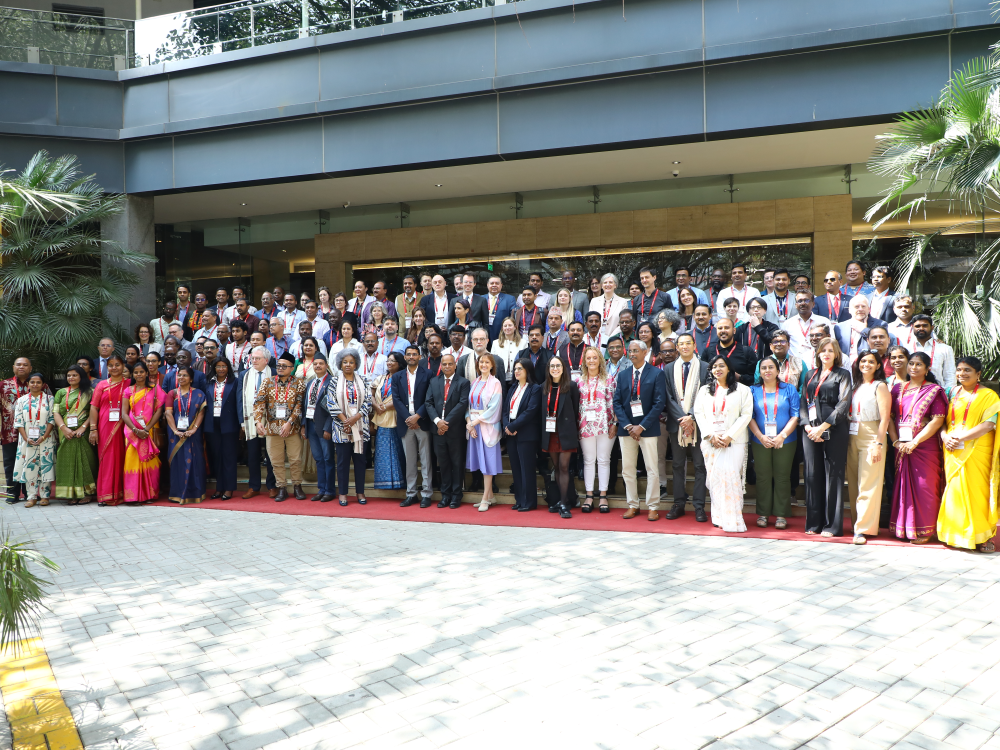
The global diamond open access community gathered in Bengaluru for conversation over kaapi and chai. Malavika Legge reports.

After a first summit in Toluca, Mexico in 2023 and a second gathering in Cape Town, South Africa in 2024, the Third Global Summit on Diamond Open Access took place in February 2026 in Bengaluru, Southern India.
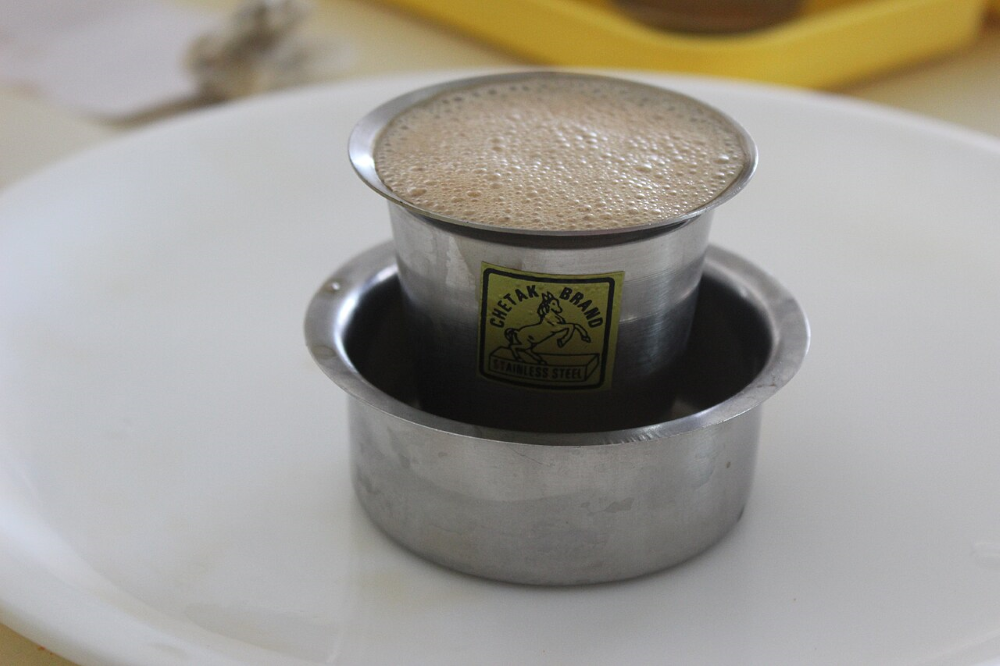
While I’ve been based in the UK for two decades, and working as program manager for OASPA (a mission-driven Dutch foundation working to advance open access (OA)) since 2022, I was born and grew up in India. Imagine my delight, then, at attending a work conference in India offering masala chai and filter-coffee, or kaapi—a dense, bitter coffee-decoction paired with sweet, frothy milk.
Just like South Indian kaapi (Figure 1), this personal reflection distills and brings to the fore some dichotomies in the discussions I observed.
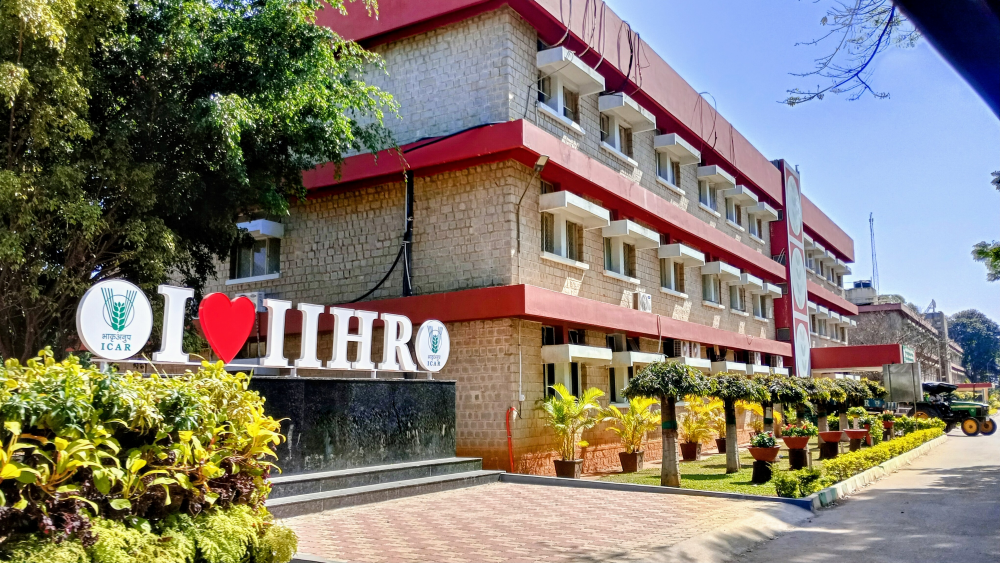
The diamond OA community is undoubtedly global. Professionals from all inhabited continents came together in Bengaluru, and we basked in the generous hospitality of our hosts—Sridhar Gutam and his colleagues at the ICAR-Indian Institute of Horticultural Research (IIHR, Figure 2). Proceedings were driven by Science Europe and IIHR, with backing from honorary chairs in India and active support and hard work from an extensive International Overseeing Committee.
Speakers and convenors were present in person and online, enabling global coverage from a wide variety of perspectives: early-career researchers and emerging scholars to established professors and editors; infrastructures and platforms to policy pundits and funders. Representatives of ministries of science, technology and innovation shared views alongside metadata experts and repository connoisseurs.
Speakers like Pedro Ovando, director of scientific and humanities publications at Mexico’s Secretariat of Science, Humanities, Technology and Innovation (SECIHTI) and Solange Victory, head of editorial production at the Latin American Social Science Council (CLACSO), argued that enabling a diamond route for OA is a sovereign, political choice—a matter for national governments. Public funds are the source of sustainability, and public infrastructures are the stable, secure solution; to ensure that science is treated as a public good, political leaders need to “see the light of day” and establish policy that supports non-commercial approaches. In this vision, diamond open access is not a publishing problem but a political one. “This is a governance issue,” said Charu Verma, chief scientist of India’s CSIR-NIScPR (the National Institute of Science Communication and Policy Research for India’s Council of Scientific & Industrial Research). What we need is “global co-operation at government level.”
Other speakers, including Marin Dacos (national open science coordinator at the French Ministry of Higher Education and Research) and Rémi Quirion (chief scientist of Québec; president and CEO, Fonds de recherche du Québec, Government of Quebec, Canada) identified need for a multitude of approaches and a variety of models: public-private partnerships, collective models, Subscribe to Open, and being “open to business.”
Others still focused on the need (and opportunity) to reform publishing itself; to harness data and move beyond articles. An important part of the conversation: the massive challenge of research-assessment norms that reward prestige publications (highly ranked and “high impact” journals). Mylène Deschênes (Fonds de recherche du Québec) called the H-index factor the “fast food of research assessment” and argued that OA itself “would not work out” if researchers could not be convinced that it is in their interest. She emphasized the need for diamond OA platforms and venues to “excite” researchers.
If the rewards and incentives system for research isn’t reformed, many agreed, “diamond is doomed.” Cyrus Walther (TU Dortmund University) reminded us that early-career researchers are “more locked in” to metrics than ever, and Pragya Chaube (University of Petroleum and Energy Studies/UPES, Dehradun), spoke of misaligned incentives and researchers being stuck in a dead-cobra trap.
Professors, editors, researchers, and others repeatedly emphasized the importance of linking scholarly inquiry with societal benefit. “Science and society are deeply connected,” said Yensi Flores Bueso of University College Cork. “We have to remember why we do science … It is for improving life and society.” Yet, societal engagement is consistently undervalued, leading to a “divergence between metrics and mission.”
Coming to the question at the top of this section, perhaps the most useful perspective is not about who is in the diamond OA community, but who is served by it, and how.
The website of the Third Global Summit describes diamond OA as a community-led scholarly publishing model without financial barriers for authors or readers, which makes knowledge available as a global public good. The conflation of OA with the requirement to pay per-publication fees is, then, a problem that the global diamond OA community is working to surmount.
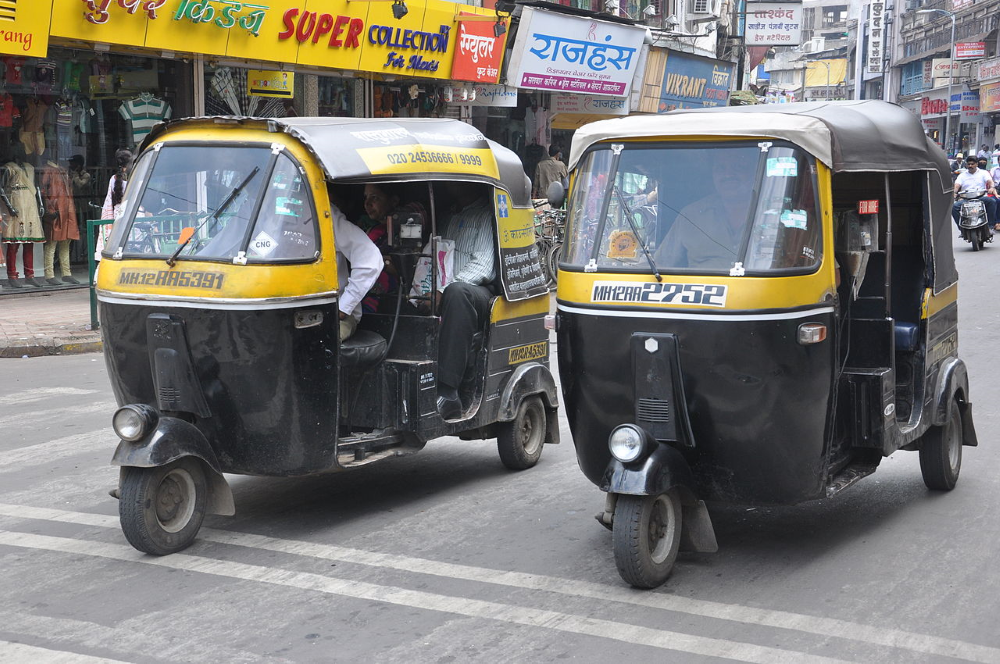
One speaker equated the average article processing charge (APC) with the purchase price for a single auto rickshaw. Another speaker said that in India, in some disciplines, the average APC was equivalent to the six-month salary for a post-doctoral researcher.
Devika Madalli (director, INFLIBNET, University Grants Commission-Inter University Centre, India) observed that “money excites people,” but among those gathered at the Third Diamond OA Summit, “it is the absence of the exchange of money that is exciting.”
Yet, even in shining examples of diamond OA unblemished by APCs, precarity is the lived experience. As Sanjay Pai, editor of the Indian Journal of Medical Ethics (IJME) put it: “Diamond is the most ethical but the least sustainable model.” Wanting independence for the journal, and regularly resisting purchase/acquisition offers, he said, “Each year we [the editorial board] feel like this is the last … next year the journal is going to fold.” Still, fundraising efforts succeed, and this PubMed/MEDLINE listed journal continues to be openly available online without APCs or mandatory author or reader charges, as it has been since its first issue in 1993.
The IJME collects donations and charges for print circulation. Lots of diamond OA journals have similar stories and struggles. This is not to say that diamond OA is impossible (indeed, examples of active diamond OA operations exist across Africa, India, Indonesia, Latin America, the USA and beyond). But the reality faced by Pai and his editorial board underscores the importance of continuing to discuss, collaborate on, and experiment with funding routes for diamond OA that will preserve what is most valued and valuable about such publications, each in its own context.
Some attending the summit argued for the total eradication of APCs, while others focused on extractive pricing practices rather than APCs themselves. The context and the level of APC were also factors in the debate. Clearly, removing this paywall-to-publish-OA raises complex issues.
There was also discussion of funding from sources besides APCs: long-term funding, government funding, sharing of resources/software, and in-kind support. We heard how membership fees can be a practical and pragmatic way to harness collective funding (and a helpful one, as donations cannot be collected in all cases).
Model considerations aside, we repeatedly heard that the aim of diamond OA is not just to remove paywalls but to shift power imbalances. Leslie Chan of the University of Toronto Scarborough spoke of redistributing both power and capacity in a way that values plurality of languages, formats, and different ways of knowing.
Similarly, Mohamed Mostafa of DataCite explained that diamond OA is not just about removing paywalls from articles, but “about building the infrastructure that allows all forms of knowledge to be visible, reusable, and valued.” This was another theme of the summit, not least because of what was described as “fund crunch” for diamond OA operations: the necessity of open platforms, open infrastructures, open-source software, and repositories.
Luciana Balboa (University of Buenos Aires–CONICET in Argentina) described diamond OA as a choice that counters “isolated discourse,” emphasizing the need to “intensify networks beyond borders and between universities.” Attendees seemed to agree that regional knowledge and regional infrastructures hold immense potential. I often hear “regional” and “local” used in contrast to “global” and “international”; this framing misses that regional communities ARE the global community.
Across multiple viewpoints, then, it seems quite clear that diamond OA is about more than economics. It is about communities served, the opportunity that lies in linked, interoperable infrastructures, and the antithesis to market-driven capture—of not just the knowledge itself, but also the infrastructures, systems, and software that hold, encode and make open content visible, knowable, and shareable.
What enabling factors contribute to successful diamond OA outputs? Are there standards and minimum viable conditions?
Per Lautaro Matas from La Referencia, the challenge is not the lack of standards but the “absence of structural conditions to implement high-quality metadata and PIDs at scale.” Ongoing conversations about standards boiled down to contextual relevance, because, as Imma Subirats Coll from the Food and Agriculture Organisation (FAO) of the United Nations put it, “A lot of the dynamics that matter depend on the discipline.” Many other speakers emphasized the need for training.
The “Diamond-OA Standards and Capacity Building” panel was asked how to ensure a focus on training and standards does not de-platform good and culturally varied and locally contextual work. Kyile van Zyl from African Journals Online (AJOL) responded that while standards need to be as similar as possible, they also need to be as flexible as necessary: “We need to remove the feeling that different sets of criteria is a weakness; the world is not uniform … We need to broaden our understanding of what research looks like.” The panel also discussed the importance of validation being a journey rather than Y/N on compliance. A much-enjoyed cricket metaphor: “You don’t expect a new batter to come to the crease and hit a six straightaway.”
Several summit speakers, including from Angola, Canada, Italy, and India, mentioned multilingualism. A big opportunity, of course, is the potential for artificial intelligence to dissolve linguistic barriers. Going one step further, Vinod Ilangovan (Leibniz Information Centre for Science and Technology) described innovations like the open research knowledge graph as “a lighthouse in the publication flood … community governed and publicly funded … Radically open and free to use so everyone can create, edit, add, complement, reuse.”
While conversations about standards and criteria touched on resources, examples, guidelines, a diamond registry, and other such services, the community was cognizant of the challenge of making sure that diamond OA does not result in additional costs and challenges for excluded and marginalized communities.
A pre-summit workshop centered on the question of a “realistic and fair minimum-standard for data sharing, reproducibility and open workflows in diamond OA journals.” One group suggested that published outputs should make a difference to society: “researchers should know that their work is not just about them achieving a degree” but about “social connectivity.” I hope the roadmap to be developed from this summit includes care-centered practices focused on societal engagement and benefit.
Diamond OA is neither homogenous nor an echo chamber. From diversity in national policies to diverging views on funding models; with operations that have differing capacities, contexts, infrastructures, and resources; with focus on eradicating paywalls alongside the push to move beyond economics; and with various diamond OA journals and platforms across the world relying on different types of partnerships, collaborations and internal norms—practices and philosophies across the globe are nuanced and multifaceted. Moreover, many who are actively engaged in diamond OA publishing (or supporting it) were absent from the Third Diamond Summit, meaning that the full spectrum of the diamond OA community is even more kaleidoscopic.
Despite this rich variation, conversations at the summit echoed many longstanding discussions in the wider OA movement. Returning to the roots of the OA movement, Rahul Siddharthan, professor at The Institute of Mathematical Sciences, India, described diamond OA as a “recent term”—a latest attempt to address original intentions around scholarly openness going back to calls for open repositories in the 1990s.
Today, the entire OA network continues to grapple with tensions around the public/private debate, the selection of financial models, the need for wider systemic reforms, the importance of seeking values-alignment among partners, the use of metadata and persistent identifiers, our reliance on software and systems, the need to change the minds of governments and institutional leaders, and, finally, the push for a more equitable and participatory system for scholarly communication. Where does that leave this diamond OA community?
Those working to advance diamond OA are united by the desire to build a more equitable system. As Siddharthan put it, our purpose is “advancing the knowledge of humanity, which includes everyone. And so—improving the world. In this context we want everybody to know more. Not for some to know more than others.”
Leslie Chan argued that the need of the hour is an intervention for equity, not a technical change that maintains existing power structures. We need “epistemic decentralization”: not to merely co-opt peripheral knowledge into central agendas, but to reimagine what is thought of and denoted as valid and valuable knowledge. Chan’s points resonate strongly with OASPA’s description of open access in three dimensions and our most recent position paper emphasizing participation.
Equity is a matter of governance. Those who have the authority to define what is legitimate and what success looks like will steer the direction of reform. For example, is content that does not have a DOI considered legitimate?
Challenging us to reimagine equitable scholarly communications, Chan suggested we need to:
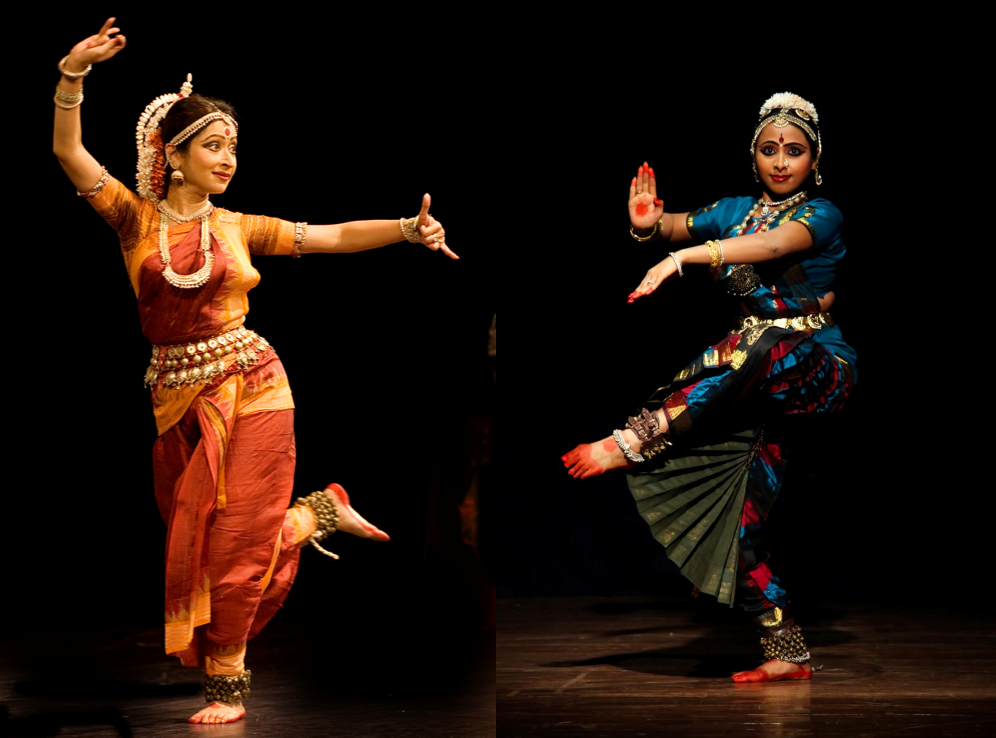
The Third Diamond OA Summit in Bengaluru, India, was constantly collaborative, constructive, and community spirited. The Fourth Global Diamond OA Summit will be held next year in Indonesia.
If this global diamond OA community is to succeed, it must remain a space that listens with care to its constituent parts, even in cases of opposing views. A global effort that rejects one single template or pipeline or format, but celebrates multilateralism, plurality, and diversity—even (and perhaps especially) if this sometimes means relinquishing order, structure, or control. Such flexibility is hard to practice; but the philosophy of “Vasudhaiva Kutumbakam,” mentioned more than once during closing remarks at the summit, offers a helpful guide: despite differences, we are, every one of us, interconnected, and interdependent—one earth, one family.
Acknowledgement: This piece is a product of notes taken at the Third Diamond Open Access Summit combined with personal reflections. The article would not have been possible without the varied and valuable presentations from speakers, not all of them named, who freely shared their views. If I have unknowingly misrepresented someone’s philosophy or message, then the fault in interpretation and relaying is mine alone.
10.1146/katina-040126-1
Copyright © 2025 by the author(s).
This work is licensed under a Creative Commons Attribution Noncommerical 4.0 International License, which permits use, distribution, and reproduction in any medium for noncommercial purposes, provided the original author and source are credited. See credit lines of images or other third-party material in this article for license information.


